

Stakeholders Call for Stronger Action Against Child Trafficking and Rising Street-Connected Children Crisis
|
Listen to this article
Getting your Trinity Audio player ready...
|
Edited by Solomon Kwabena Nana-Ansah -Paaps –
Growing concerns over the increasing number of street-connected children and the activities of human trafficking syndicates have prompted renewed calls for stronger collaboration among government institutions, security agencies, development partners, and civil society organizations to protect vulnerable children and strengthen national security.
In response to the situation, the Ministry of Gender, Children and Social Protection (MoGCSP), through its Human Trafficking Secretariat (HTS), convened a Stakeholder Consultative Meeting to address the influx of school-age foreign nationals and the associated risks linked to trafficking networks.
The meeting brought together representatives from various Ministries, Departments and Agencies (MDAs), law enforcement and security institutions, development partners, and child protection stakeholders to deliberate on coordinated strategies for addressing the growing phenomenon of street-connected children, child trafficking, forced street begging, and related vulnerabilities.
Do you want the best Odds? Click Here
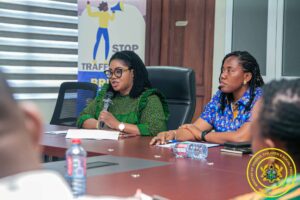
Addressing participants, the Minister for Gender, Children and Social Protection, Hon. Dr. Agnes Naa Momo Lartey, described the situation as an urgent national challenge requiring immediate, collective, and multi-sectoral action.
She acknowledged that migration within the West African sub-region is consistent with the principles of regional integration and the ECOWAS Protocol on Free Movement. However, she expressed concern that some children are increasingly being exposed to exploitation, abuse, child labour, trafficking, forced street begging, and other harmful practices.

The Minister also highlighted related social challenges, including child gambling, substance abuse, and the growing risks faced by children living and working on the streets. She emphasized the importance of strengthening rehabilitation and reintegration programmes, including family tracing and reunification where appropriate, as well as providing educational opportunities, apprenticeship programmes, and mentorship support to help affected children rebuild their lives.
“Protecting children is a shared responsibility that cannot be undertaken by a single institution,” Dr. Lartey stated. “It is imperative that we work collectively to ensure that every child within our borders is protected from exploitation, abuse, neglect, and trafficking.”
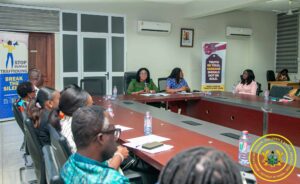
Discussions during the consultative meeting focused on the current situation of street-connected children, emerging trafficking trends, irregular migration patterns, and potential refugee-related concerns.
Stakeholders, including the Department of Social Welfare, the Ghana Police Service’s Anti-Human Trafficking Unit, the Ghana Immigration Service’s Anti-Human Smuggling and Trafficking in Persons Unit, National Security, and the Ghana Refugee Board, shared experiences and perspectives on the challenges while proposing practical short-term interventions.

Participants also examined collaborative approaches to prevention, protection, rehabilitation, and reintegration, in line with the Ministry’s Five-Year Strategic Plan for Street-Connected Children and Young Persons (2024–2028). The strategy prioritizes coordinated stakeholder action, stronger child protection systems, and sustainable solutions to improve the welfare of vulnerable children.
At the conclusion of the meeting, stakeholders reaffirmed their commitment to deepening collaboration, enhancing information sharing, and implementing practical measures aimed at protecting children from exploitation while promoting their welfare, dignity, and development.